Beginner's Guide to Choosing a Table Tennis Blade
By RallyRove · 9 min read · Updated June 2026
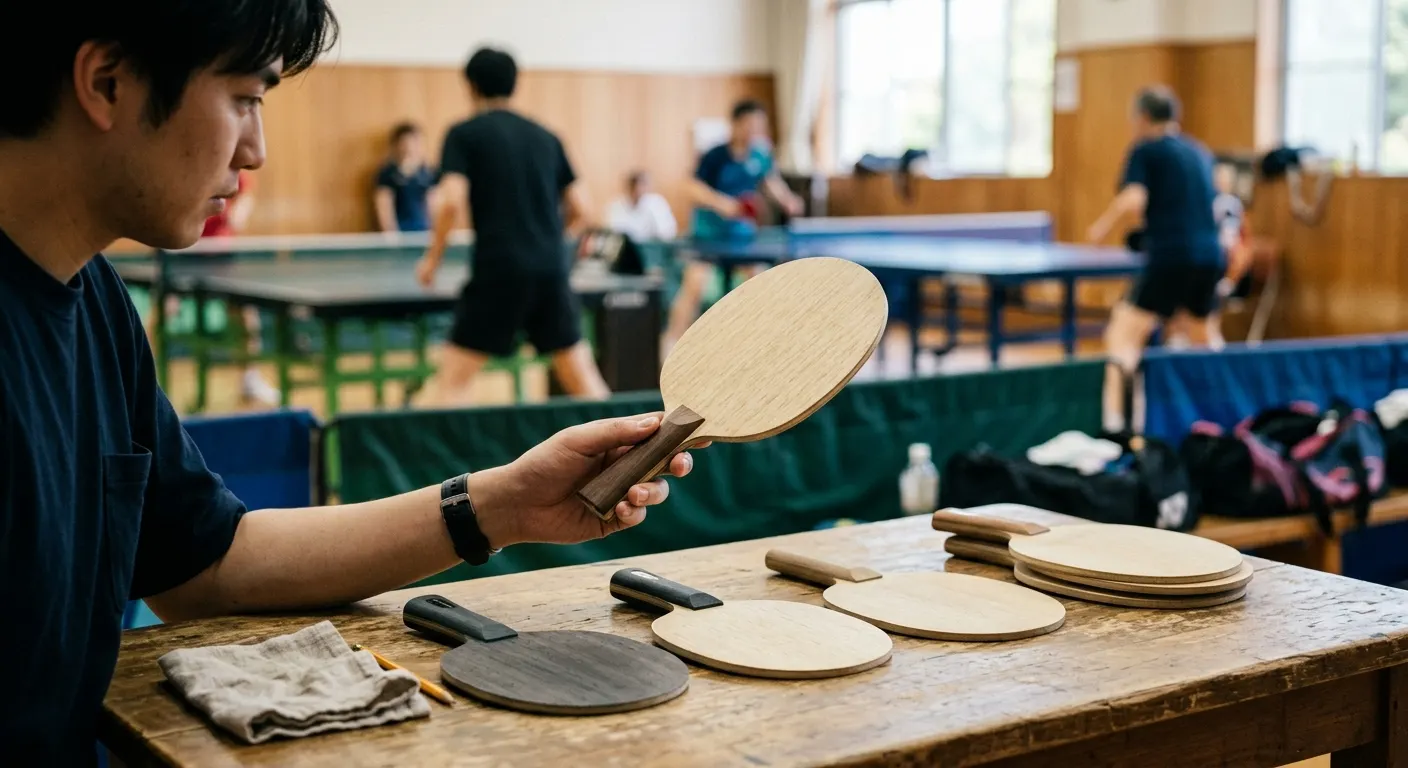
Moving from a pre-assembled paddle to a custom blade-and-rubber combination is the clearest sign that a table tennis player is serious about the game. It is also the step where the most money gets wasted, usually because a player buys a blade that is too fast for their current skill level and struggles to control it. The blade market runs from inexpensive five-ply all-wood options at under $50 to elite carbon constructions at over $200. The decision should be driven by skill level and playing style, not by what the best players in the world use. This guide explains the blade construction categories, what each delivers, and which specific blades to consider at each stage.
Quick answer
A beginner building their first custom setup should choose a five-ply all-wood blade with a medium-slow speed rating, like the Stiga Infinity VPS V or the Tibhar 5Q. These provide forgiving dwell time that helps developing players feel the contact and build consistent loop mechanics before adding the speed and stiffness of carbon composite blades.
This guide contains affiliate links. RallyRove may earn a commission at no cost to you.
Why blade speed matters more than brand
Table tennis marketing is dominated by blades named after world champions, and the temptation to buy the blade used by your favorite professional is understandable and almost always wrong at the beginner and intermediate level.
Professional players use fast, stiff carbon blades because their technique is refined enough to control the pace and produce exactly the stroke weight they intend on every shot. A beginner or intermediate player using the same blade gets the speed but cannot produce the precise contact timing needed to use it, resulting in balls that fly long constantly and serve-return situations that are unmanageable.
The right question is not what blade is best, but what blade speed is right for where your technique is today. Start slow and add speed as your stroke mechanics can support it. This is the piece of advice that saves the most money in the long run.
All-wood versus carbon blades
All-wood blades have more dwell time, the amount of time the ball remains in contact with the surface during a stroke. More dwell time gives players more feedback and more control over the direction and angle of departure. This is what makes five-ply all-wood blades ideal for technique development.
The Stiga Infinity VPS V Blade is the most widely recommended first custom blade for intermediate players moving off a pre-assembled setup. Its five-ply Swedish wood construction provides a medium-fast speed rating with a large sweet spot that is forgiving on the off-center contacts that are still frequent during stroke development.
Carbon blades add one or more layers of carbon fiber or a composite material, dramatically increasing stiffness and speed. They reduce dwell time significantly, which means less margin for timing errors. The Butterfly Timo Boll ALC Blade uses an Arylate-Carbon layer construction that adds carbon speed while retaining more dwell time than pure carbon blades. It is designed for advanced competitive players who need speed but cannot sacrifice feel entirely. For a player still developing their loop mechanics, it is the wrong tool.
The Butterfly Zhang Jike Super ZLC Blade and similar elite carbon blades are at the extreme end of speed and stiffness. They are genuinely excellent for the world-class players and top club players who use them. For everyone else, they are an expensive way to make table tennis harder.

Stiga Infinity VPS V Blade
A Swedish five-ply all-wood blade with a large sweet spot and a medium-fast speed rating that makes it one of the best blades for advancing intermediate players.

Butterfly Timo Boll ALC Blade
Named for the German world-class player and engineered around his style, the Timo Boll ALC pairs an Arylate-Carbon layer with a soft outer wood for speed with retained touch.
Ply count and what it means
The number of wood plies in a blade affects its stiffness and speed. Five-ply blades are the most common and provide the best balance of feel and control. Seven-ply blades are stiffer and faster, with less dwell time. Composite blades that mix wood and fiber layers sit on a spectrum depending on where the fiber layer is placed.
The DHS Power G13 Blade is a seven-ply all-wood blade favored by players building a Chinese-style tacky-rubber setup. It pairs particularly well with the DHS Hurricane 3 rubber because the heavier, more deliberate feel of a seven-ply wood blade complements the patient, controlled looping technique that Hurricane rubber rewards. The tradeoff is weight and reduced feel for touch shots compared to a five-ply.
A useful rule of thumb: if you are still working on consistent loop mechanics, start with a five-ply all-wood blade. Add speed through your rubber choices first, because rubber is cheaper to replace when you want to step up. Save the carbon blade upgrade for when you have outgrown the speed of a good five-ply and feel confident in your stroke consistency.
DHS Power G13 Blade
A seven-ply all-wood blade from the Chinese national team brand, offering a heavier, power-oriented feel for players who generate pace through active, muscular strokes.

DHS Hurricane 3
The dominant rubber of the Chinese national team and arguably the most influential table tennis rubber ever made. Tacky topsheet with a dense sponge generates heavy loop spin through controlled, deliberate mechanics.
Tibhar 5Q Blade
A five-ply all-wood blade optimized for an all-round attacking style, with a controlled speed rating and a large sweet spot that suits developing intermediate players.
Handle shape: shakehand options
The vast majority of Western and most modern Asian players use a shakehand grip, where the handle is held like a handshake with the index finger on the blade edge. Three handle shapes dominate the shakehand market: flared, straight, and anatomic.
Flared handles swell at the bottom to prevent the paddle from slipping during aggressive swings. They are the most popular by a wide margin and are a safe default for most players. Straight handles suit players who shift their grip between forehand and backhand, a technique used by some players for increased reach on the backhand side. Anatomic handles have a pronounced palm swell designed to reduce grip fatigue but divide opinion and should only be chosen after trying one.
All three handle shapes are available on blades like the Stiga Infinity VPS V Blade and the Butterfly Timo Boll ALC Blade . At the time of purchase, confirm which handle shape the specific listing includes, as blades are often sold in multiple handle variants at the same model name.
Stiga Infinity VPS V Blade
A Swedish five-ply all-wood blade with a large sweet spot and a medium-fast speed rating that makes it one of the best blades for advancing intermediate players.
Tibhar 5Q Blade
A five-ply all-wood blade optimized for an all-round attacking style, with a controlled speed rating and a large sweet spot that suits developing intermediate players.
Rubber pairing: matching rubber speed to blade speed
A blade is only half the equation. The rubber speed must be matched to the blade speed to avoid a combination that is uncontrollably fast or frustratingly slow.
A slow five-ply all-wood blade like the Tibhar 5Q Blade can support a faster rubber like the Tibhar Evolution MX-P without the combination becoming unmanageable, because the blade's softness absorbs some of the rubber's pace. A fast carbon blade paired with a fast rubber creates a combination that only expert players can control on every shot.
For beginners building their first custom setup, a good starting combination is a five-ply all-wood blade with the Xiom Vega Europe on both sides at 2.0mm sponge thickness. As technique develops, replace the rubber with faster options while keeping the blade. When the blade begins to feel slow despite fast rubber, that is the signal that a carbon upgrade is justified.
Tibhar 5Q Blade
A five-ply all-wood blade optimized for an all-round attacking style, with a controlled speed rating and a large sweet spot that suits developing intermediate players.

Xiom Vega Europe
One of the most popular intermediate rubbers globally, with a soft sponge and a forgiving topsheet that generates good spin without demanding perfect timing.
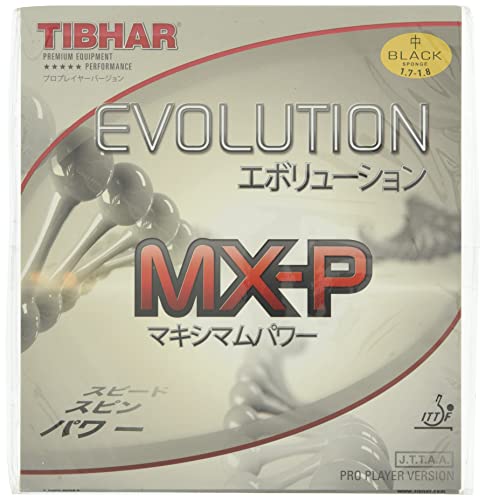
Tibhar Evolution MX-P
German-engineered high-tension rubber with a medium-hard sponge and explosive rebound, designed for attacking players who loop at full power.
Featured in this guide
Stiga Infinity VPS V Blade
A Swedish five-ply all-wood blade with a large sweet spot and a medium-fast speed rating that makes it one of the best blades for advancing intermediate players.
Butterfly Timo Boll ALC Blade
Named for the German world-class player and engineered around his style, the Timo Boll ALC pairs an Arylate-Carbon layer with a soft outer wood for speed with retained touch.
DHS Power G13 Blade
A seven-ply all-wood blade from the Chinese national team brand, offering a heavier, power-oriented feel for players who generate pace through active, muscular strokes.
Tibhar 5Q Blade
A five-ply all-wood blade optimized for an all-round attacking style, with a controlled speed rating and a large sweet spot that suits developing intermediate players.
Xiom Vega Europe
One of the most popular intermediate rubbers globally, with a soft sponge and a forgiving topsheet that generates good spin without demanding perfect timing.
FAQ
Frequently asked questions
Should a beginner start with a pre-assembled paddle or a custom setup?+
A pre-assembled paddle from a reputable brand is a perfectly legitimate choice through the intermediate level. Building a custom blade-and-rubber combination makes sense when you have a clear sense of your playstyle and specific performance needs that a pre-assembled paddle cannot meet. For most beginners, a quality pre-assembled paddle at $60 to $80 is a better starting point than immediately building a custom setup with potentially mismatched components.
Can I put any rubber on any blade?+
Yes, with one practical limit: the rubber sheet must not exceed the blade dimensions by more than 2mm on any side per ITTF rules. Beyond that, any rubber can go on any blade. The real constraint is balance: a very fast blade paired with very fast rubber creates a combination that most players cannot control. Match blade speed to your current skill level and adjust rubber speed separately as your technique develops.
How do I glue rubber to a blade?+
Apply water-based table tennis glue to both the blade surface and the rubber backing with a sponge or small brush. Let both surfaces become tacky, about three to five minutes, then press them together firmly starting from one edge and rolling across to avoid air pockets. Place under flat weight for several hours to cure flat. Water-based glue is mandatory under ITTF rules; old-style speed glue is banned from competition.
How long does a good blade last?+
A good blade can last a decade or more if cared for properly. Unlike rubber, the blade itself does not wear out through normal play. Protect it from moisture, do not leave it in extreme heat or cold, and avoid dropping it on hard surfaces that can cause delamination between plies. The rubber you mount on it will need replacing every few months; the blade underneath can be a long-term companion.