Best Table Tennis Rubbers by Playstyle and Skill Level
By RallyRove · 11 min read · Updated June 2026
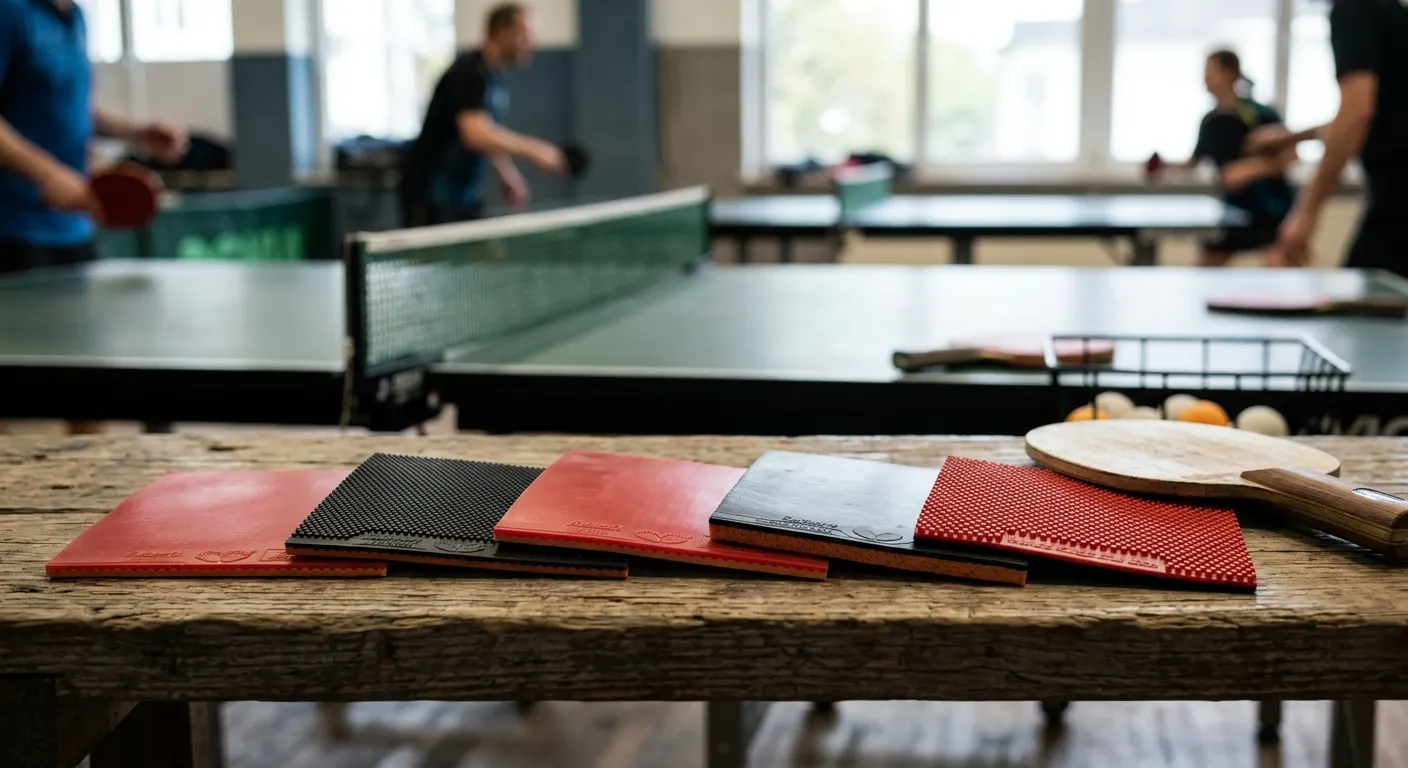
There are more than 160 table tennis rubbers on the ITTF approved list, and the marketing language around them, spring sponge, high tension, maximum topspin, overlaps in ways that make selection genuinely confusing. The right way to choose is to start with your playstyle and skill level, then narrow from there. A defensive chopper and an attacking power-looper need fundamentally different rubbers, and an intermediate player and an elite competitive player need different rubber speeds even within the same playstyle category. This guide organizes the best current options by those two axes: how you play and how well you play.
Quick answer
Attacking players at the advanced level should consider the Butterfly Tenergy 05 on the forehand and Tenergy 64 on the backhand. Intermediate attackers get the best value from the Yasaka Rakza 7 or JOOLA Rhyzer 48. All-round players who mix attacking and defensive shots fit the Xiom Vega Europe. Defensive choppers should look at Dr. Neubauer Gorilla for their disruption side.
This guide contains affiliate links. RallyRove may earn a commission at no cost to you.
How to identify your playstyle before choosing rubber
Three broad playstyle categories cover most table tennis players. Attacking players play close to the table, generate heavy topspin loops, and try to win points by forcing errors with pace and spin. All-round players mix looping with blocking and counter-hitting, play at a medium distance from the table, and value consistency alongside spin. Defensive players play further from the table, chop incoming topspin back as backspin, and win through consistency and disruption rather than outright aggression.
Most players are attackers at the recreational and competitive serious-recreational level, which is why the catalog skews heavily toward offensive rubbers. If you are not sure which category fits you, ask yourself how you try to win points: by attacking with speed and spin, by outlasting opponents through consistency, or by chopping and blocking until they make errors.
Skill level is the second axis. A beginner with an attacking style needs a different rubber than an advanced player with the same style. The difference is speed and forgiveness: faster, harder rubbers reward good technique and punish poor technique. Slower, softer rubbers are more forgiving and help developing players build consistent mechanics before they add speed.
Best rubbers for attacking players
Advanced attacking players, those with consistent looping mechanics and regular competitive play at the USATT rating or club level, have the widest choice in the catalog. The Butterfly Tenergy 05 is the enduring standard for forehand attacking rubber. Its Spring Sponge technology generates heavy topspin from a full loop swing and produces a predictable, stable arc that rewards technique. It has been at or near the top of competitive rubber rankings for over a decade for good reason.
For the backhand, where many players want slightly more speed and less emphasis on heavy spin, the Butterfly Tenergy 64 provides a faster, slightly softer alternative that excels in fast drives and counter-loops. Many advanced players run Tenergy 05 forehand and Tenergy 64 backhand for this reason.
Players who want the highest current spin ceiling, and who have the compact, efficient looping technique to use it, should consider the Butterfly Dignics 09C . Its harder sponge and high-tension topsheet generate elite spin from short, efficient swings. It is used by numerous world top-10 players and represents the current pinnacle of non-tacky offensive rubber.
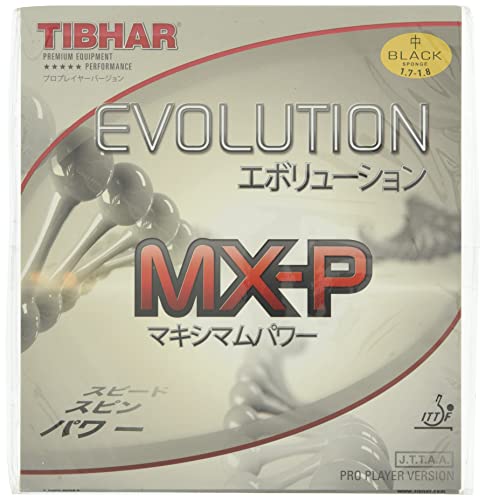
Intermediate attacking players are often better served by the Yasaka Rakza 7 , which provides spring-sponge spin generation and genuine loop performance at roughly half the cost of Tenergy. The Tibhar Evolution MX-P is a strong alternative for players who want more speed and are comfortable with a harder sponge. The JOOLA Rhyzer 48 Rubber is a reliable ITTF-approved choice at a mid-range price, particularly for players who want to match the rubber in JOOLA's top pre-assembled paddles. The Tibhar Aurus Prime Rubber offers a slightly softer feel than the MX-P with similarly strong all-round performance.

Butterfly Tenergy 05
The benchmark offensive rubber used at the highest levels of the game for two decades. Spring Sponge technology generates exceptional topspin and a stable arc on full-swing loops.

Butterfly Tenergy 64
The speed-focused sibling of Tenergy 05 with a softer sponge formulation that rewards fast, direct hitting and flat drives as well as loops.

Butterfly Dignics 09C
The flagship rubber from Butterfly that surpassed Tenergy at the top levels. Harder sponge and a high-tension topsheet generate elite spin and speed from a compact swing.

Yasaka Rakza 7
A high-performance non-tacky rubber that bridges the gap between beginner and elite. Aggressive spring-sponge construction at a price point well below Butterfly premiums.
Tibhar Evolution MX-P
German-engineered high-tension rubber with a medium-hard sponge and explosive rebound, designed for attacking players who loop at full power.

JOOLA Rhyzer 48 Rubber
The ITTF-approved rubber found on JOOLA's top pre-assembled paddles, also sold separately for players building a custom setup around a trusted, balanced offensive sheet.
Best rubbers for all-round players
All-round players need a rubber that handles both offensive loops and defensive touches with consistency. The extremes of the catalog, the fastest offensive rubbers and the most disruptive defensive rubbers, are not the right fit.
The Xiom Vega Europe is one of the most popular rubbers for this playstyle, with a soft sponge that generates good topspin on loops while remaining forgiving enough on blocks and pushes to stay consistent. It suits intermediate all-round players well and allows technique development without punishing timing errors harshly.
Players who use tacky Chinese rubber on their forehand and want a dependable all-round rubber that pairs well with it often turn to the DHS Hurricane 3 as their primary forehand choice. Hurricane 3 rewards a patient, deliberate looping style and generates heavy spin from close-to-table brush contacts. It is not primarily an all-round rubber, but for players whose forehand is their strongest weapon and who use a softer backhand rubber, it fits within an all-round style framework.

Xiom Vega Europe
One of the most popular intermediate rubbers globally, with a soft sponge and a forgiving topsheet that generates good spin without demanding perfect timing.

DHS Hurricane 3
The dominant rubber of the Chinese national team and arguably the most influential table tennis rubber ever made. Tacky topsheet with a dense sponge generates heavy loop spin through controlled, deliberate mechanics.
Best rubbers for defensive players
Defensive choppers and combination-bat players need a different set of tools. Long-pips rubber on the backhand side is the defining characteristic of the classic chopper style. Long pips reverse opponent spin naturally, producing returns that carry backspin when the opponent attacks with topspin. This is disruptive precisely because many players are not trained to attack backspin reliably.
The Dr. Neubauer Gorilla is a widely used long-pips defensive rubber with a reliable reversal effect and strong consistency across the sheet. It works effectively for both close-table blocking and deep-table chopping, which makes it one of the more versatile long-pips options.
The attacking side of a combination bat is usually an offensive rubber. For a defender who occasionally counter-attacks on the forehand, the Yasaka Rakza 7 or the Xiom Vega Europe provide enough spin and speed for attack opportunities without adding the unforgiving speed that disrupts the slow, controlled defensive game.
Dr. Neubauer Gorilla
A long-pips defensive rubber designed to disrupt attacking play with unpredictable return spin. Widely used by chopper defenders and combination-bat players.
Yasaka Rakza 7
A high-performance non-tacky rubber that bridges the gap between beginner and elite. Aggressive spring-sponge construction at a price point well below Butterfly premiums.
Rubber pairing: matching forehand and backhand
Most serious players do not use the same rubber on both sides of the blade. The forehand and backhand have different stroke mechanics and benefit from different rubber characteristics. The most common pairing at the advanced level is a faster, higher-spin rubber on the forehand where full-power loops are generated, and a slightly softer or more controlled rubber on the backhand where touch, feel, and counter-loop precision are priorities.
A typical advanced setup might be Butterfly Tenergy 05 forehand with Butterfly Tenergy 64 backhand, or Butterfly Dignics 09C forehand with a softer version. Intermediate players commonly pair Yasaka Rakza 7 on one side with Xiom Vega Europe on the other. The key principle is to match the speed and spin output to how you use each wing in actual play, not to mirror both sides identically.
Pairing rubber with the right blade also matters. A slow all-wood blade like the Stiga Infinity VPS V Blade can support faster rubbers because the blade's softness absorbs excess pace. A fast carbon blade like the Butterfly Timo Boll ALC Blade pairs better with controlled rubbers that do not compound the already high speed of the blade.
Butterfly Tenergy 05
The benchmark offensive rubber used at the highest levels of the game for two decades. Spring Sponge technology generates exceptional topspin and a stable arc on full-swing loops.
Yasaka Rakza 7
A high-performance non-tacky rubber that bridges the gap between beginner and elite. Aggressive spring-sponge construction at a price point well below Butterfly premiums.

Stiga Infinity VPS V Blade
A Swedish five-ply all-wood blade with a large sweet spot and a medium-fast speed rating that makes it one of the best blades for advancing intermediate players.
Featured in this guide
Butterfly Tenergy 05
The benchmark offensive rubber used at the highest levels of the game for two decades. Spring Sponge technology generates exceptional topspin and a stable arc on full-swing loops.
Butterfly Dignics 09C
The flagship rubber from Butterfly that surpassed Tenergy at the top levels. Harder sponge and a high-tension topsheet generate elite spin and speed from a compact swing.
DHS Hurricane 3
The dominant rubber of the Chinese national team and arguably the most influential table tennis rubber ever made. Tacky topsheet with a dense sponge generates heavy loop spin through controlled, deliberate mechanics.
Yasaka Rakza 7
A high-performance non-tacky rubber that bridges the gap between beginner and elite. Aggressive spring-sponge construction at a price point well below Butterfly premiums.
Xiom Vega Europe
One of the most popular intermediate rubbers globally, with a soft sponge and a forgiving topsheet that generates good spin without demanding perfect timing.
Tibhar Evolution MX-P
German-engineered high-tension rubber with a medium-hard sponge and explosive rebound, designed for attacking players who loop at full power.
FAQ
Frequently asked questions
What rubber should a complete beginner use?+
A beginner should use a slow, soft rubber with a sponge thickness of 1.8mm to 2.0mm that makes the ball forgiving on off-center contacts. Rubbers like the Xiom Vega Europe are soft enough to develop stroke mechanics without the ball flying off the table on every mistimed stroke. Avoid Tenergy, Dignics, and any rubber labeled as fast or extra-hard until your loop mechanics are consistent.
Is tacky rubber or non-tacky rubber better for a beginner?+
Non-tacky rubber is generally more forgiving for beginners because it relies on the sponge and topsheet together for spin rather than pure surface stickiness. Tacky rubber like DHS Hurricane 3 requires an active, deliberate looping technique to work properly; passive or underdeveloped strokes produce weak, low-spin returns rather than the heavy loops the rubber is capable of generating.
What is a good budget alternative to Tenergy 05?+
The Yasaka Rakza 7 is the most consistent recommendation for players who want Tenergy-like spring-sponge performance at roughly half the price. The JOOLA Rhyzer 48 and Tibhar Evolution MX-P are also solid alternatives. None of them fully replicate the Tenergy 05 experience at the highest contact speeds, but all of them deliver genuine performance improvement over entry-level rubber.
Should I use the same rubber on both sides of my blade?+
Most serious players do not. The forehand usually benefits from a faster, higher-spin rubber for power loops, while the backhand often needs a slightly softer or more controlled rubber for touch and counter-loop precision. Using the same rubber on both sides is fine when starting out, but differentiated rubbers become an advantage as stroke mechanics become more developed and playstyle preferences become clearer.